Haga clic aquí para la traducción al español (Google Translate)
This is a brief post looking forward to some potentially useful data & analyses that may become available soon & what I think their implications may be for how we should best schedule teaching & studying time for those for whom learning a foreign language is a critical necessity. In other words, I’m making a bold prediction!
Intensity of study may be as important as total number of hours of study
What a small number of studies tentatively appear to indicate (See selected papers below) is that the intensity of study is as important as the total number of hours studied, e.g. 100 hours of intensive study over 4 weeks (25 hours per week) or semi-intensive, over 7 weeks (~15 hours per week), will likely return substantially higher learning gains than a “drip-feed” of 100 hours over an academic year (~3 hours per week).
The same number of hours but quite a different result, not just in terms of growth in vocabulary size, which is fundamental to developing linguistic proficiency, but particularly in terms of more complex language patterns, e.g. verb argument constructions, complex clause combinations, etc., which are what many students &/or their teachers say they want to learn.
Eagerly awaiting some informative data & analyses
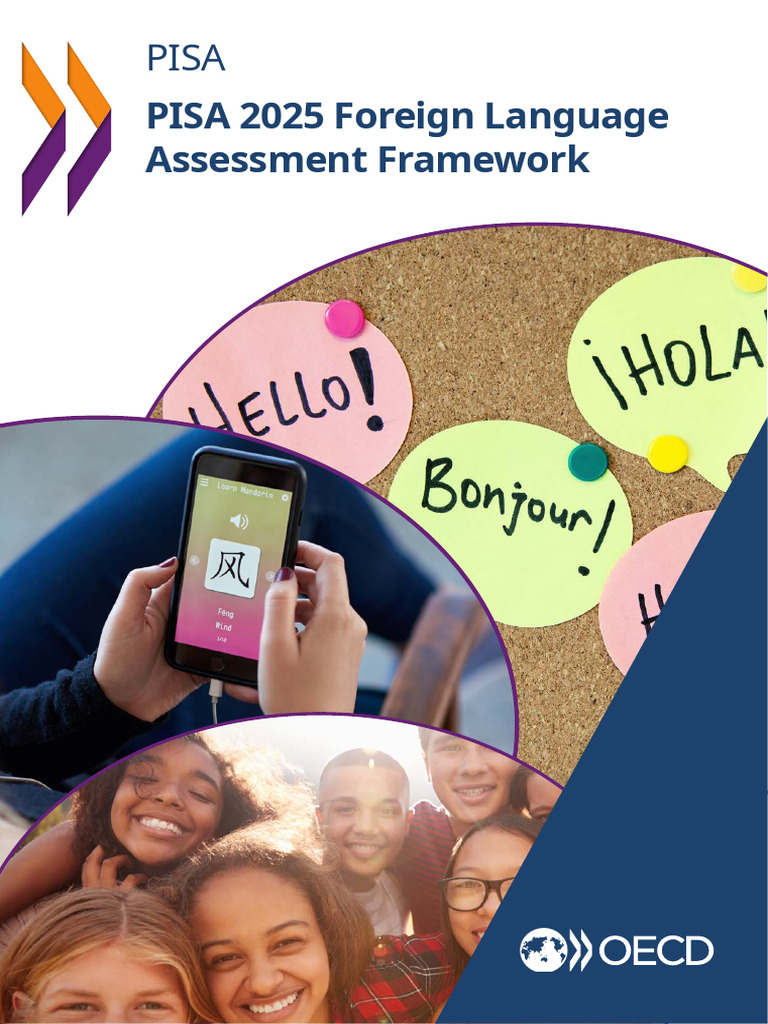
I think we’ll get an idea from a much larger sample size when the final results of the OECD’s 2025 PISA analyses of foreign language learning in schools are published next year. Different OECD countries study foreign languages at different degrees of intensity & start at different ages but the OECD PISA tests all students at the same age, after completing compulsory education. Hopefully, a well-designed regression analysis should be able to reveal any significant correlations between intensity & final language learning attainment.
If such a correlation were to be found & were sufficiently substantial, this would make an argument, if not for starting foreign languages later but studying them more intensively, at least for supplementing foreign language studies with international exchanges between schools/institutions &/or attending foreign language summer schools (which are already very popular), as well as the many other benefits of living in & experiencing other countries’ cultures.
Let’s see how this turns out next year!
Selected papers for further reading
- Llanes, À., & Muñoz, C. (2009). A short stay abroad: Does it make a difference? System, 37(3), 353–365. https://doi.org/10.1016/j.system.2009.03.001
Muñoz, C. (2008). Age-related differences in foreign language learning. Revisiting the empirical evidence. 46(3), 197–220. https://doi.org/10.1515/IRAL.2008.009 - Muñoz, C. (2012). Intensive exposure experiences in second language learning. Multilingual Matters. (book)
- Muñoz, C. (2014). Contrasting Effects of Starting Age and Input on the Oral Performance of Foreign Language Learners. Applied Linguistics, 35(4), 463–482. https://doi.org/10.1093/applin/amu024
- Muñoz, C., Cadierno, T., & Casas, I. (2018). Different Starting Points for English Language Learning: A Comparative Study of Danish and Spanish Young Learners. Language Learning, 68(4), 1076–1109. https://doi.org/10.1111/lang.12309
- Muñoz, C., & Llanes, À. (2014). Study Abroad and Changes in Degree of Foreign Accent in Children and Adults. The Modern Language Journal, 98(1), 432–449. https://doi.org/10.1111/j.1540-4781.2014.12059.x
- Muñoz, C., & Serrano, R. (2007). Same hours, different time distribution: Any difference in EFL? System, 35(3), 305–321. https://doi.org/10.1016/j.system.2007.02.001
- Muñoz, C., & Singleton, D. (2011). A critical review of age-related research on L2 ultimate attainment. Language Teaching, 44(1), 1–35. https://doi.org/10.1017/S0261444810000327